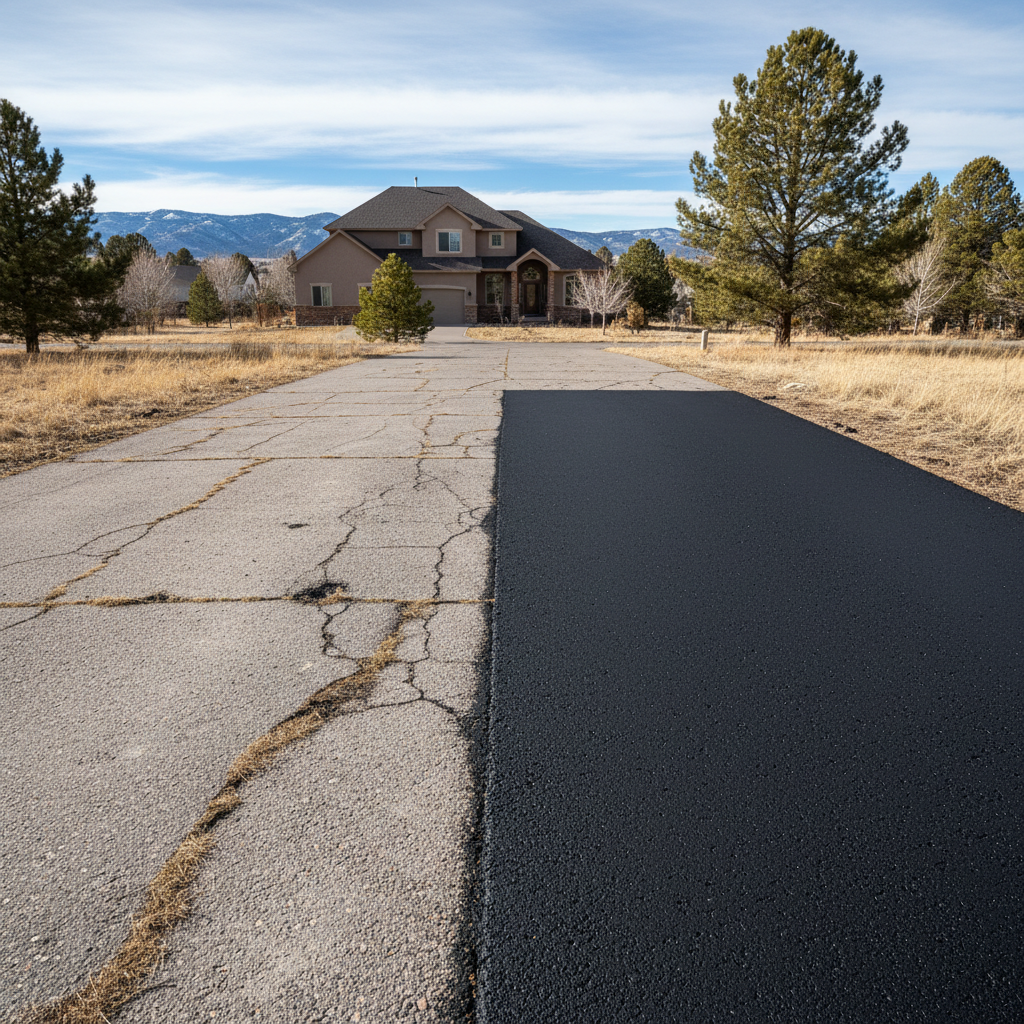
Got a driveway that's seen better days? Maybe you've got some pesky potholes, wide cracks, or just general surface deterioration. When it comes to fixing those issues, you've generally got two main approaches for patching: a full cut-and-replace, or a surface overlay. As a local guy who's been doing this for years, I see folks in Lafayette trying to figure out which one is right for them all the time. Let's talk through the pros and cons.
Cut-and-Replace Patching: The Gold Standard
This is what I consider the most robust, long-term solution for specific, localized damage. When we do a cut-and-replace, we're not just covering up the problem. We're getting rid of it entirely. We'll mark out the damaged area, cut clean lines around it, and then remove the old, failing asphalt. Sometimes that means going down to the base layer, sometimes it's just the asphalt itself. It really depends on what caused the damage in the first place.
Once the old stuff is out, we clean the area, apply a tack coat to help the new asphalt bond, and then lay down fresh, hot asphalt. We compact it thoroughly, making sure it's level with the surrounding pavement. It's a precise job, and when it's done right, that patch should be as strong, if not stronger, than the original pavement around it.
Pros of Cut-and-Replace:
- Durability: This is the big one. A properly executed cut-and-replace patch is designed to last for many years. You're addressing the root cause of the damage, not just masking it.
- Targeted Repair: It's perfect for isolated potholes, alligator cracking in a specific spot, or areas where the sub-base might be failing.
- Appearance: While you'll see a seam, a good patch blends in much better than a surface-level fix. It looks professional and intentional.
Cons of Cut-and-Replace:
- Cost: It's generally more expensive per square foot than an overlay because it's more labor-intensive and uses more material.
- Time: It takes a bit longer to do, as there's excavation and removal involved.
- Not for Widespread Damage: If your whole driveway is falling apart, doing dozens of cut-and-replace patches isn't practical or cost-effective. You'd be better off with a full replacement or a larger overlay.
Asphalt Overlay: The Surface Saver
An asphalt overlay, sometimes called a resurface, is a different beast. Instead of digging out the old asphalt, we're putting a new layer right on top of it. This is a great option if your driveway has widespread surface deterioration – lots of minor cracks, fading, or a generally rough texture – but the underlying structure is still sound. Think of it like putting a fresh coat of paint on a wall that's structurally fine but looks a bit tired.
Before we lay down the new asphalt, we'll clean the surface thoroughly, fill any significant cracks, and sometimes apply a leveling course to even things out. Then, we apply a tack coat and spread a new, relatively thin layer (usually 1.5 to 2 inches) of hot asphalt over the entire existing surface. It gets compacted, and boom – you've got a fresh, smooth driveway.
Pros of an Overlay:
- Cost-Effective for Widespread Issues: If your whole driveway needs a facelift but isn't completely failing, an overlay is often much cheaper than a full tear-out and replacement.
- Improved Appearance: It gives your entire driveway a uniform, brand-new look. It's a significant curb appeal booster.
- Faster Installation: Since there's no excavation, it's generally a quicker process than a full replacement or multiple cut-and-replace patches.
Cons of an Overlay:
- Doesn't Fix Structural Problems: This is crucial. If you have significant base failure, drainage issues, or deep, structural cracks, an overlay will only be a temporary fix. Those problems will eventually reflect through the new surface.
- Reduced Lifespan if Not Done Right: If the underlying pavement isn't properly prepared, or if there are existing issues, the overlay won't last as long as a cut-and-replace or a full replacement.
- Raises Driveway Height: Adding a new layer will raise the height of your driveway. You need to consider how this impacts garage door clearances, drainage, and transitions to sidewalks or curbs. This is especially important in older Lafayette neighborhoods where some driveways already sit pretty close to the garage door threshold.
Which One Should You Choose for Your Lafayette Home?
Here's my straightforward advice:
- Choose Cut-and-Replace if: You have isolated potholes, severe alligator cracking in specific areas, or sections where the asphalt has completely disintegrated. This is for targeted, deep-seated problems. It's the right choice for that one stubborn pothole that keeps coming back.
- Choose an Overlay if: Your driveway has widespread surface cracks, a rough texture, or just looks old and faded, but the underlying base is still solid. You're looking for a cost-effective way to refresh the entire surface.
For most homeowners in Lafayette, especially with our freeze-thaw cycles, addressing specific areas with a cut-and-replace patch is usually the more durable solution for localized damage. You don't want to just cover up a problem that's going to pop right back up next winter. If your whole driveway is just tired, but not broken, an overlay can be a great way to get a few more years out of it before a full replacement.
Ultimately, the best way to figure out what's right for your driveway is to have a professional take a look. I'm happy to come out, assess the damage, and give you an honest recommendation. Give Heritage Asphalt Co a call, and we can walk through your options together.