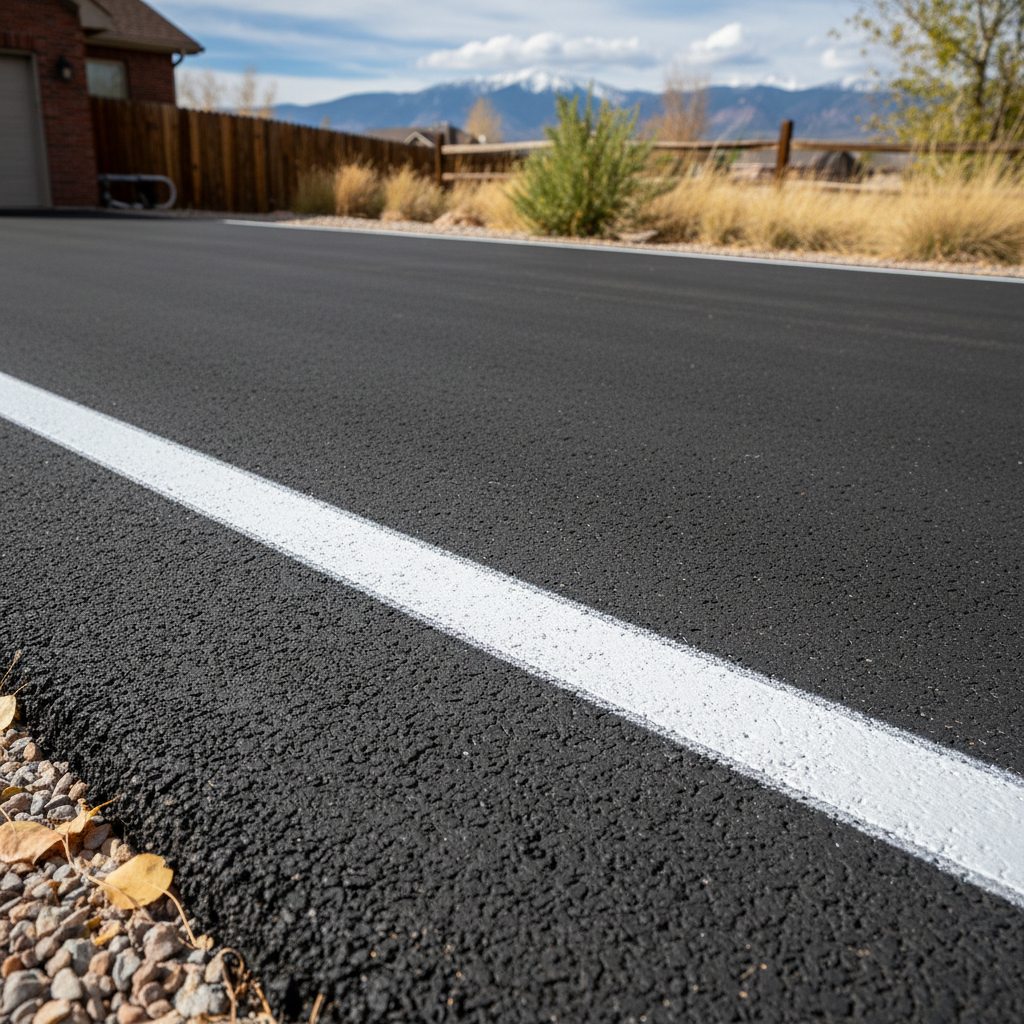
Do I really need to stripe my residential driveway? It's just my house.
That's a fair question, and honestly, for most single-family residential driveways, you probably don't *need* full-on striping like a parking lot. When I talk about striping, people often picture those bright yellow lines in a commercial lot. For a home, it's more about functionality and curb appeal, especially if you have a larger driveway, a shared driveway, or if you're trying to guide visitors. Maybe you want to define parking spots if you have multiple cars, or mark a safe play area for kids. Sometimes, folks want to outline the edges of their driveway, particularly if it blends into a gravel shoulder or lawn, to give it a cleaner, finished look. It's not a code requirement for homes, but it can definitely make things look sharper and function better.
How long does asphalt striping last in Colorado's weather?
Colorado weather is no joke, right? We get those intense summer sun days, then a foot of snow the next week, followed by freeze-thaw cycles that can really beat up pavement. For asphalt striping, you can generally expect it to last anywhere from 1 to 3 years, sometimes a bit longer if it's not a high-traffic area. The biggest factors are the quality of the paint, the surface preparation, and the amount of traffic it sees. If it's a commercial lot with heavy vehicles constantly driving over the lines, it'll wear faster. For a residential driveway, it'll hold up better. We use durable, traffic-grade paint that's designed to withstand our climate, but nothing lasts forever when it's exposed to those harsh Lafayette winters and scorching summers. Regular sweeping and keeping chemicals off it helps too.
What kind of paint do you use for striping? Is it safe?
We use specialized traffic paint, not just any old house paint. There are a few different types, but the most common for asphalt are water-based acrylics or solvent-based paints. For most residential and light commercial jobs, we're using high-quality, water-based acrylic traffic paint. It's formulated to be durable, fast-drying, and resistant to fading and cracking. It’s also much better for the environment and safer to work with than the older, more volatile solvent-based options. Once it's dry, it's completely safe for people, pets, and plants. We always make sure to use products that meet or exceed industry standards for durability and safety, because nobody wants a paint job that fades in six months or causes issues for their family or customers.
Can you stripe over old, faded lines, or does it need to be redone completely?
Most of the time, yes, we can stripe right over old, faded lines. That's usually the most cost-effective approach. We'll clean the surface thoroughly first to make sure there's no loose debris or dirt that would prevent the new paint from adhering properly. If the old lines are still somewhat visible, it makes our job easier because we can use them as a guide. However, if the old lines are really chunky, flaking badly, or if the layout needs to change significantly, sometimes it's better to remove the old paint first. That's a more involved process, often involving grinding or sandblasting, and it adds to the cost. For most routine re-striping jobs, a good cleaning and then applying fresh paint directly over the old is perfectly fine and gives a great result.
How long does it take for the paint to dry, and when can I drive on it?
This is a big one, especially if you're trying to get back to normal life! The good news is that modern traffic paints dry pretty fast. Generally, you're looking at about 15 to 30 minutes for the paint to be dry to the touch, depending on the temperature, humidity, and how thick the application is. However, "dry to the touch" isn't the same as "fully cured." We usually recommend staying off the freshly striped area for at least an hour, but ideally 2-4 hours, especially if it's a warmer day. If it's cooler or more humid, it might take a bit longer. We'll always give you a specific timeframe when we're on site, but planning for a few hours of restricted access is a safe bet. It's a small inconvenience for lines that will last.
What's the process for getting my driveway or parking lot striped?
It's pretty straightforward with Heritage Asphalt Co. First, you'd reach out to us, either by phone or through our website, and tell us what you're looking for. We'll schedule a time to come out and take a look at your property. This is important because every job is a little different. We'll measure the area, assess the condition of the asphalt, and discuss your specific needs – do you need parking spaces, fire lanes, directional arrows, or just edge lines? We'll then put together a detailed, no-obligation quote for you. If you approve it, we'll schedule the work. On the day of the job, we'll clean the surface, lay out the lines according to the plan, and then apply the paint. We use professional-grade equipment to ensure crisp, straight lines. Once we're done, we'll give you instructions on drying time and answer any final questions. We try to make it as smooth and hassle-free as possible for you.
My asphalt is cracked and has potholes. Should I fix that before striping?
Absolutely, 100% yes. Striping over cracks and potholes is like putting a fresh coat of paint on a rusty car – it might look okay for a minute, but it's not addressing the underlying problem. The paint won't adhere properly to damaged areas, and those imperfections will show right through, making the new lines look messy and unprofessional. More importantly, those cracks and potholes are structural issues. They'll continue to get worse, especially with our clay soils here in Lafayette that expand and contract. If you stripe over them, you'll be wasting your money on the striping because the pavement itself will fail around it. We always recommend repairing any significant cracks or potholes, and ideally sealcoating the asphalt, before we come in to stripe. A smooth, well-maintained surface is key for striping that looks good and lasts.